Transform Your Bible Reading: 3 Tips (continued)
This Post is part of a series. Find the others here:
Do you struggle to read the Bible consistently? When you read, do you feel things just aren’t making sense? Perhaps you read a few paragraphs or even a chapter, close your Bible, and realize that you are not really sure what you just read. You caught a few individual verses, but you missed how they fit together.
Understanding Is Hard and Takes Work
There are plenty of reasons why we may struggle to understand the Bible. Here are a few diagnostic questions that may help you pinpoint the origin of your struggle.
Do I have a relationship with Jesus? Paul reminds us that the things of God are spiritually discerned (1 Cor. 2:10–16). Without faith that brings us into a relationship with Jesus, we will lack the Spirit who guides us into truth.
Am I praying to ask for the Holy Spirit’s help? Even after salvation, I still need the Holy Spirit’s help as I read the Word He inspired. We call this the illumination of the Holy Spirit. Without His aid, we will struggle to know the mind of God through the Word of God.
Am I paying attention? Often, we fail to understand what we are reading simply because we are not really paying attention. Are your eyes moving across the page while your mind is running through your to-do list, your worries, or what you need to do next? Maybe the distractions are coming from the room around you. Whatever the cause, good Bible reading requires focused attention. We must learn to slow down, quiet the distractions, and apply our minds to the words in front of us.
Am I working hard to trace the flow of thought? It’s easy to miss the larger point of a passage when we aren’t following the author’s flow of thought. Try taking a few simple notes or summarizing what you have just read in your own words. Ask, “What is the author saying here, and how does it connect to what came before?” If you can summarize the basic point, you are well on your way toward understanding the passage.
Am I reading enough and then rereading? Sometimes we miss the point because we stop reading too soon or give up too quickly. Understanding often comes through repetition. Just as practice makes us more proficient in our work and hobbies, rereading helps us grow in our understanding of Scripture. If a passage does not make sense the first time, read more context and then go through it again. Slow down and keep working at it. The Word of God is worth the effort. Your spiritual health depends on it!
Let’s take the issue of context a little further. We often read a few verses or a chapter and assume we have finished for the day. But the author’s thought may not be finished simply because we reached a big number printed on the page. That brings us to a surprisingly simple tip: Try reading your Bible without the chapters and verses.
The Chapters and Verses Weren’t Always There
The biblical authors did not write chapter and verse numbers into the text. The chapter divisions that we commonly use developed during the Middle Ages, and the verse numbering familiar to us came centuries later.
Those divisions are incredibly useful. Imagine trying to tell someone where to find John 3:16 without them. They make it much easier to preach, teach, study, memorize, and discuss specific portions of Scripture. I am certainly not suggesting that we get rid of them completely. But something can be helpful for one purpose and a hindrance for another.
Chapter and verse numbers can subtly train us to read the Bible as a collection of tweets or sound bites rather than a collection of books. We reach the end of a chapter and instinctively feel that we have reached the end of a thought. Sometimes we have, but sometimes we haven’t. The chapter and verse numbers are not inspired.
Remember That the Bible Is Made Up of Books
The Bible is one great book made up of many individual books. Those individual books were written as distinct and purposeful compositions. Each biblical author intentionally arranged his material to communicate something. We understand this naturally with almost everything else we read.
Imagine opening a novel to page 147, reading the second paragraph, and then trying to explain the story. You might understand the individual sentences, but you would have very little idea what they mean within the larger book. If we wouldn’t do this with a typical book, why do we sometimes approach the Bible that way? We open to a verse, read it by itself, and expect to understand its full meaning apart from everything around it.
And one simple way to begin seeing that context is to remove the visual interruptions that constantly tell your eyes, “Stop here.”
Tip 2: Read Your Bible without the Chapters and Verses
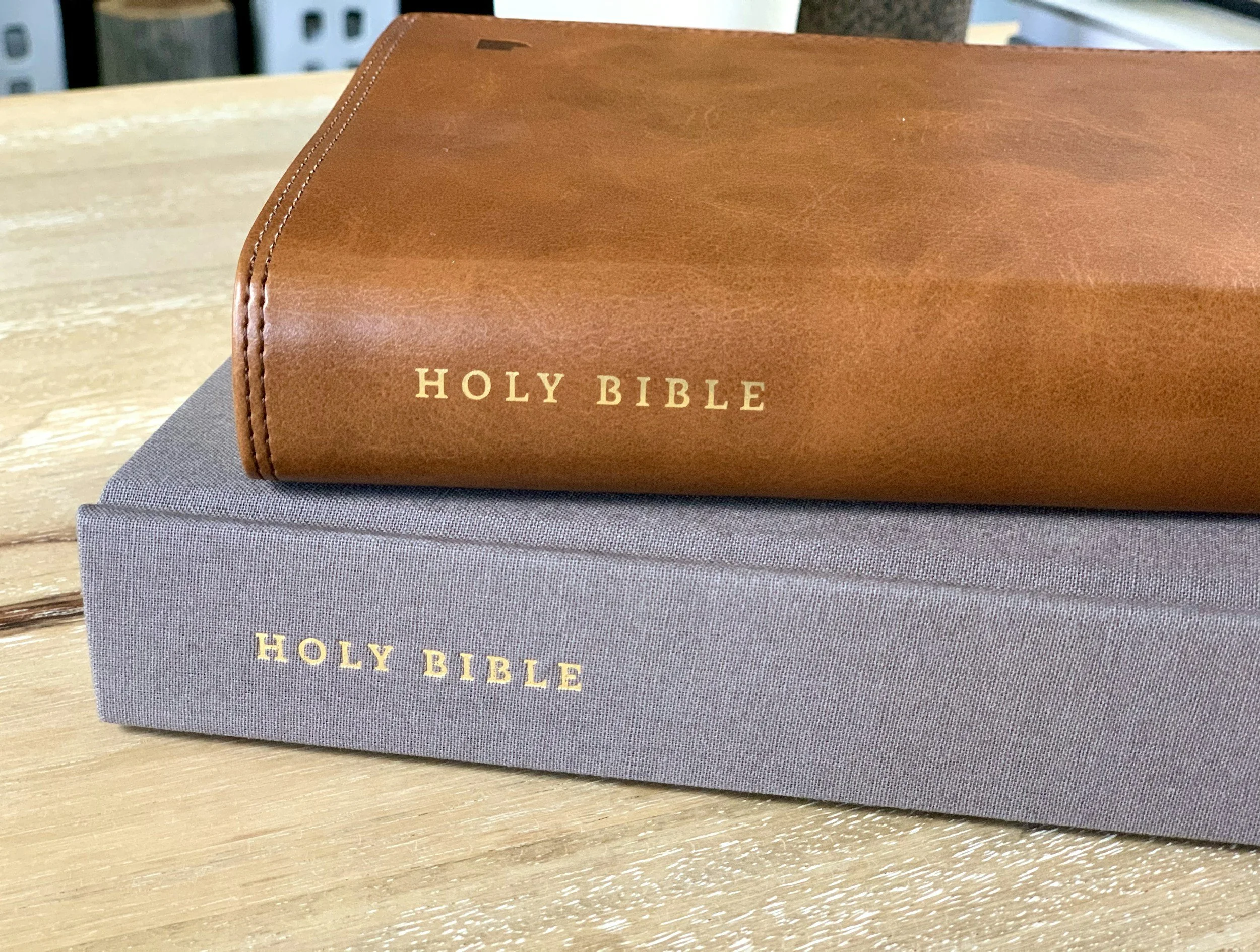
There are several easy ways to do this. You can purchase a reader’s Bible, such as the ESV Reader’s Bible, that removes chapter and verse numbers from the main text. Many Bible apps and websites, including Bible Gateway, also allow you to hide verse numbers, while software such as Logos can display or export biblical text without them. The particular method is not important. The point is to change the way you see the text. The form in which we encounter Scripture can affect the way we read it.
If you want to use your regular Bible, try ignoring the chapter and verse numbers while you read. Instead of thinking, “I need to read chapter 3 today,” simply read until the author completes the thought. Read an entire letter like Philippians or Colossians in one sitting. Read several chapters of Genesis as one continuous story. Read a whole section of one of the Gospels without stopping every time you cross a chapter number.
I’m betting you will be surprised by what you notice. Connections that you had missed before may suddenly become obvious. The flow of thought may make more sense. Repeated words and themes may begin to stand out. You may start to see why one paragraph follows another.
Most importantly, you will begin to encounter the Bible less as a collection of isolated verses and more as the Word of God given to us in books that were meant to be read, understood, believed, and obeyed.
Don’t throw out your Bible because it has chapter and verse numbers in it. They are tremendously helpful. Just learn to ignore them sometimes.
In other words, read your Bible like a book.
NOTE: I first learned these tips from Andy Naselli: http://www.desiringgod.org/articles/three-tips-for-better-bible-reading.