Tip 1: Don’t Just Read—Listen Too!
If you are like most Christians, you don’t need me to tell you that Bible reading is important. Chances are, you already know that IT IS important even if you do not always discipline yourself to do it. My goal for the next few articles is not to convince you to read the Bible since you know that you should. Instead, I want to give you some practical ways to transform your Bible reading into a more enjoyable, fruitful, and life-changing experience. Try these tips to see how God changes you as you read His Word.
The Blessing and Danger of Easy Access
As Christians in a modern world, we often forget about the embarrassment of riches we possess when it comes to Bibles and biblical resources. You likely own more than one copy of God’s Word and can also access it through the internet, a smartphone app, or Bible software.
We should rejoice in these resources and thank God for providing such wonderful blessings. However, the Bible’s abundant accessibility can also make us callous toward it. The more we have of something, the less likely we are to see it as precious and valuable. Our all-access pass to the Bible can obscure that it is “more desirable than gold” and “sweeter than honey and the drippings of the honeycomb” (Ps. 19:10).
The Bible Was Meant to Be Heard
Let us not forget that, for most of human history, the majority of people did not possess personal copies of God’s Word. Instead, they relied primarily on listening to it being read aloud. In Nehemiah 8, for example, the people stood and listened as Ezra the scribe read the Law of God to them. Paul likewise instructed Timothy to “give attention to the public reading of Scripture” (1 Tim. 4:13). The Bible was certainly written to be read, but it was also written with the expectation that it would be heard. Listening to the Bible can help us recognize God’s majesty and appreciate Scripture’s artistry and literary beauty. These are features of the Bible that can be easy to miss, especially when we read only small portions at a time.
The Benefits of Listening
Listening to the Bible has many benefits. It helps us glimpse the overall story of the Bible by forcing us to focus less on chapters and verses and more on the flow of its message. It presents Scripture’s artistry and helps us appreciate it as literature rather than as a collection of disconnected devotional snippets (more on this in the next article). It also allows us to become caught up in the Bible’s story. We may even discover that we listen to Scripture for much longer than we typically read it. In addition, hearing larger portions at once helps us place individual passages within their broader context, leading to greater understanding. We could go on, but I think you get the idea.
Build Your Day around the Bible
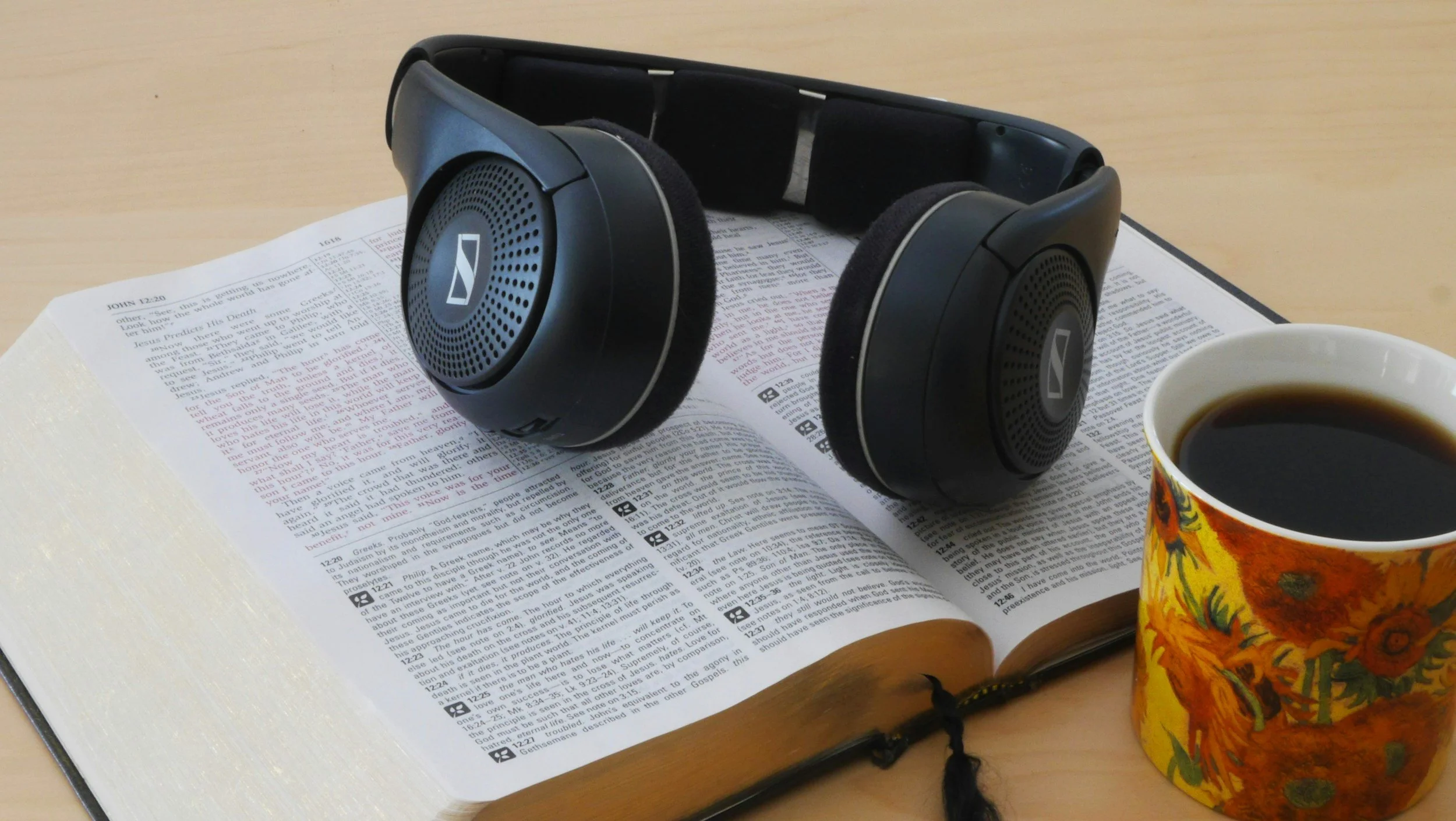
Audio Bibles are often quite helpful in increasing or supplementing our daily intake of Scripture. You can listen while exercising, traveling, cooking, cleaning, or simply relaxing. Many excellent audio Bibles are available, including dramatized versions that may be particularly helpful when listening to the narrative portions of Scripture.
One excellent free option is the ESV Bible app, which also offers additional recordings by various readers for purchase. The Bible.is app provides free audio versions as well. Many translations and recordings are also available through Audible.
All in all, I hope that you will consider listening to your Bible as well as reading it.
NOTE: I first learned these tips from Andy Naselli: http://www.desiringgod.org/articles/three-tips-for-better-bible-reading.